The Duck That Can Be Hard To Get Right (And the Smoked Chutney That Means You Don't Have To)
A while back, in a piece about my barbecue setup, I mentioned a duck. I described a smoked ginger-peach chutney that I rated more highly than almost anything else I cook, and promised I'd write the whole thing up properly one day.
This is me making good on that.
When this duck comes off the barbecue the way it's meant to, it's the best thing I cook. The first time I made it, it was perfect — blushing pink through the middle, tender right to the edges, skin that crackled — and that result is what I've chased every time since. There's a particular satisfaction to getting something right that genuinely fights back, and duck fights back.
I'll be straight that it's not a weeknight cook and it asks for your full attention — more on that below. But get the method right and lean on one piece of kit, and it's repeatable enough to put at the centre of a proper meal. And the recipe has a rare bit of generosity built in: the chutney is so good that even on an off night, the plate still lands.
Where it comes from
The recipe is a feature in Jamie Purviance's Weber's American Barbecue (A Modern Spin on the Classics). I'm not going to reproduce it here — Purviance wrote it, it's his to publish, and if you're going to cook from it you should have the book on the shelf anyway. It's one of those barbecue books that earns its place rather than gathering grease in a drawer.
What I will do is tell you how it actually goes in my hands, what I've learned the hard way, and the one change that matters more than any other.
The chutney is the hero — so make it first
Most people would treat the chutney as the side note and the duck as the event. Cook this a few times and you'll flip that entirely.
Make the chutney first — not days ahead, just prepped and ready before the duck goes on. It needs a little time to come together, and getting it done up front changes how the rest of the cook feels: once the chutney's made and you've tasted it, the pressure comes off the bird. You already know the plate is going to be good.
Two things make it sing. The first is to be generous and use everything fresh — don't go light on the ginger, in particular. The second is the change that turns it from very good into the thing people ask about: smoke the chutney as well as the duck. Most people only think to smoke the meat. Run the chutney through the smoke too and the ginger turns sharp and a little savoury, the sweetness pulls back, and you get something with far more edge than a standard fruit chutney. Sharp, smoky, with a ginger kick that cuts straight through the richness of the duck. It's the detail I'd fight for if you only took one thing from this piece.
A note on the peaches
One honest wrinkle, because the timing's a little contrary: this lands as a hearty winter cook — the smoke, the ginger, the rich bird all suit a cold afternoon — but I actually made the version I'm describing in December, with fresh peaches at the height of the season. Peaches are high summer here, roughly December through March, so a midwinter duck and a peach chutney aren't natural bedfellows on the calendar.
That's no reason not to cook it now. If you can get good fresh peaches, char the halves for a bit of smoky depth — and here's a small thing I learned the fiddly way: don't bother peeling them afterwards. Pulling the skins off charred peach halves is more trouble than it's worth. Leave the skins on, slice, and use them as they are. You won't notice the skin in the finished chutney.
Out of season, tinned peaches do the job perfectly well — I've used them before and the chutney was every bit as good. The one change is that you skip the separate charring step; tinned peaches won't take a char the way fresh halves do, so just add them in and let the smoke from the cook carry the flavour. Either way, the ginger and the smoke are doing the heavy lifting; the peach is the backing vocal, not the lead.
The equipment, and why the thermometer isn't optional
I cooked this on the electric Weber — the Pulse — the first time, with cherry wood chips for the smoke. Cherry's a gentle, fruit-forward smoke that flatters poultry without bullying it, and it's my default for anything with feathers.
But the piece of kit that actually makes duck possible is the Meater Pro. I've said before that if you buy one thing for barbecue cooking, make it this — and duck is the clearest argument for it I can give you.
Duck is unforgiving in a way that chicken simply isn't. The gap between underdone and overdone is narrow, the fat renders on its own schedule no matter what you'd planned, and the difference between a cook you're proud of and one you're quietly apologising for is often just a few degrees. You cannot eyeball that. The Meater takes the guesswork out entirely — a real-time internal reading, a buzz on your phone when it's time to act, no cutting in to check and letting the juices run. The night it came out perfect, the thermometer is the reason. The nights it didn't, I'd usually got distracted.
The duck itself
I get mine from Luv-a-Duck in Port Melbourne. It's a proper specialist and the quality shows — if you're going to take a swing at a cook this temperamental, start with good meat.
The method, in broad strokes and without stepping on Purviance's recipe: chutney first and smoked; duck on with cherry smoke; Meater in from the start; and then the discipline to pull it the moment the probe says so rather than the moment you feel ready. That last part is the whole game. Duck doesn't wait for you to finish your wine.
What we ate it with
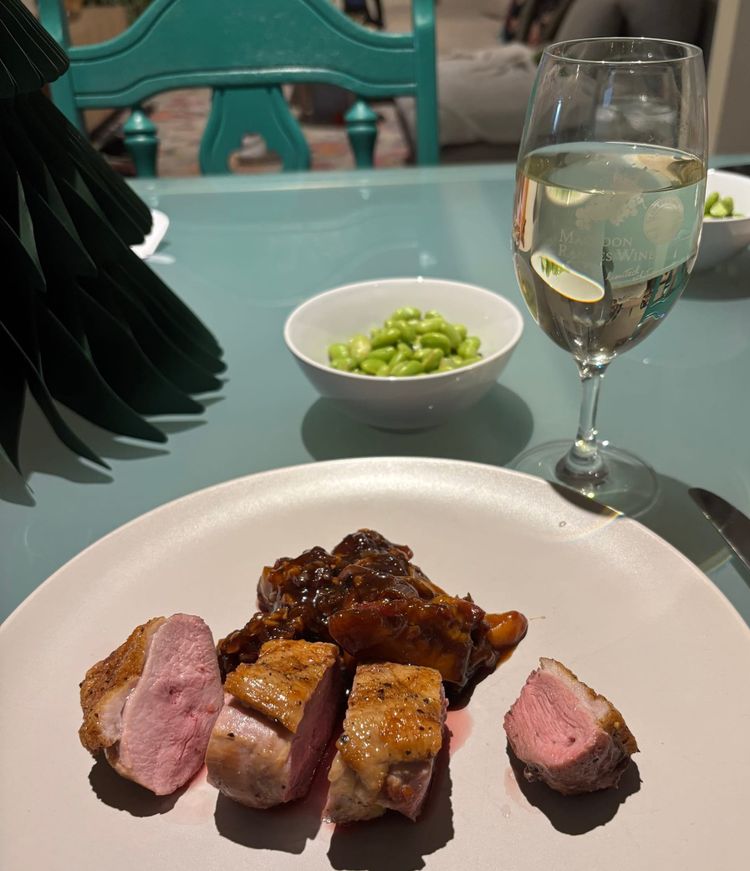
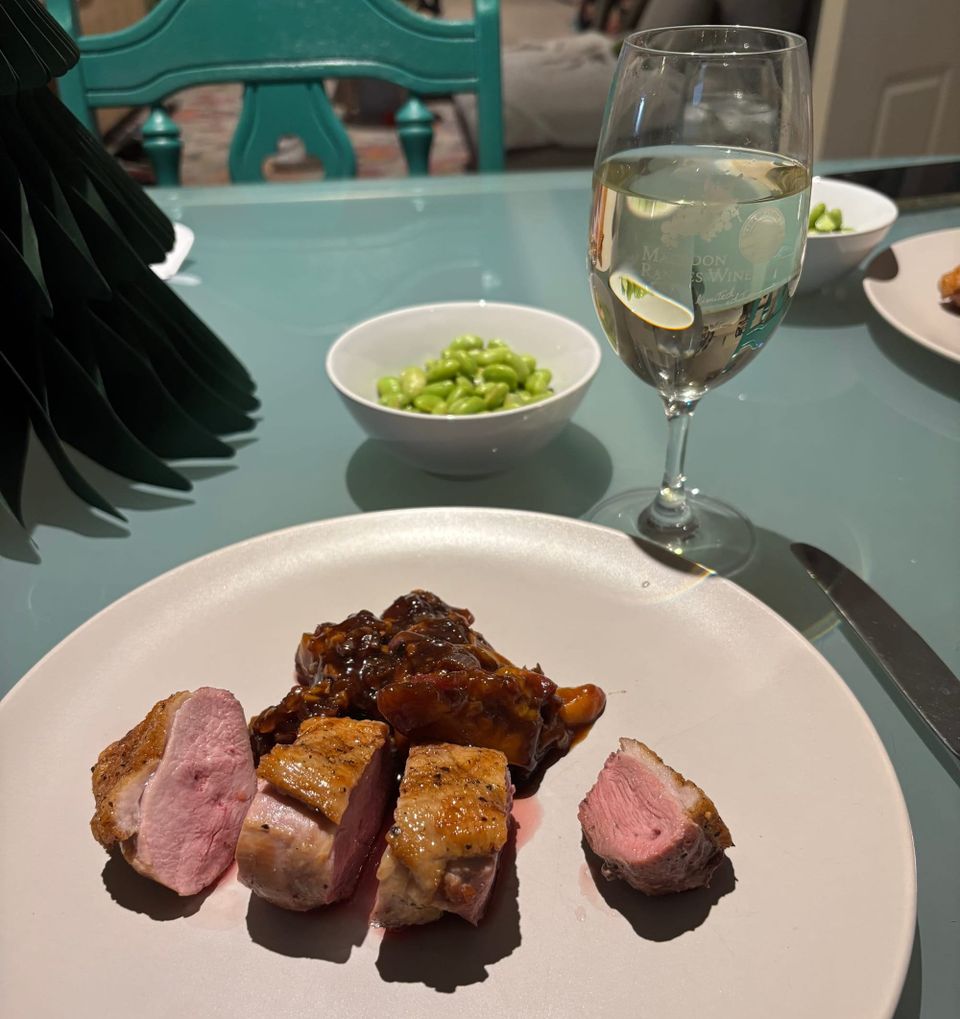
This one we ate at home in Daylesford, late on a summer afternoon with the light doing that low golden thing it does through the windows. No guests, no occasion — just us, which is honestly when I cook best.
The side was deliberately plain: edamame, heated through, a good pinch of salt, nothing else. Rich, smoky duck doesn't want a busy plate next to it. Something green, salty and simple lets the bird and the chutney stay the centre of attention.
In the glass, the Bendigo Riesling from Passing Clouds, nice and local. I've mentioned this pairing before in passing and I'll stand behind it again here: a slightly sweeter white with good acid is a far better match for duck than the big red you might reach for on instinct. It lifts the fat instead of wrestling with it, and it picks up the ginger in the chutney beautifully.
The Honest Version
Here's where it lands. This is a cook worth the effort. When the duck comes out right — and with the thermometer doing its job, it comes out right more often than not — there's nothing on my barbecue I'm prouder of. Crisp skin, pink centre, that sharp smoky chutney alongside: it's a genuine occasion of a plate, even when the occasion is just a quiet dinner at home.
It's not a weeknight throw-together, and it doesn't forgive a wandering mind — the night you stop trusting the Meater is the night you'll overshoot. But that's the whole skill of it, and a satisfying one to earn. And if you do drift a few degrees past perfect, the chutney is good enough to carry the plate anyway. Most ambitious cooks live or die on the centrepiece. This one builds in a second chance.
Make the chutney first. Smoke it. Trust the thermometer. And if you're cooking it in winter like I am now rather than in December like I did, reach for the tin — the smoke will do the rest.
The Quiet Road covers regional Victoria, Tasmania, Italy, EV road trips, and the food and wine that connects it all. Subscribe to the newsletter for one recommendation every Friday.