I've Driven Six EVs. Here's the One I'm Actually Buying.
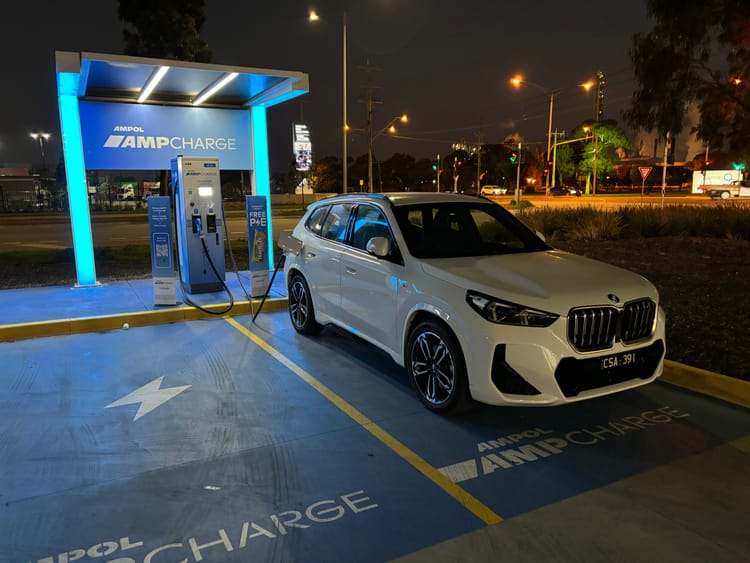
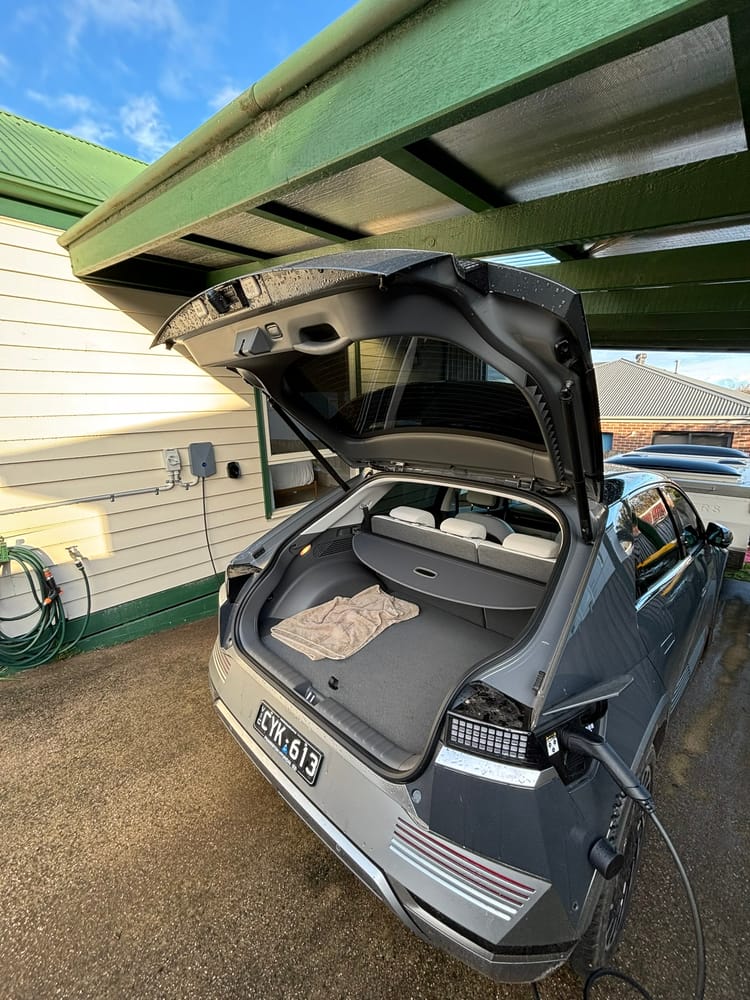
Over the past two years, I've driven an MG ZS EV, a Hyundai Ioniq 5, a Tesla Model Y, a BMW iX1, a Volvo XC40 Recharge, and a BYD Atto 3. Some for a weekend, one for six months. I've written about all of them, ranked them, and learned more about what actually matters in an electric vehicle than any amount of spec-sheet reading could have taught me.
Now I'm buying one. My own. Not a subscription, not a lease return, not a loaner. The car that I'll park in the driveway, plug in overnight, sell the old one for (you've served us well ZeeBeeDee!) and drive to Daylesford on a Friday afternoon for years to come.
It's a Zeekr 7X. And I've never test driven it.
Let me explain.
Why Now
Two things tipped me from researching to buying.
The first is the cost of fuel. The maths on EV running costs have been obvious for a while, and after two years of driving electric I can't go back to filling a tank every week and watching $100 disappear (or $200 next week, or $300 the week after) - or worse still, getting to your holiday destination but not being able to buy fuel to get home. Tell me about range anxiety now!
The second is simpler: it's the right thing to do. We're not in a position where we can wait for the perfect car, the perfect battery, or the perfect charging network. The grid in Victoria is already over 42% renewable and climbing every year — nationally, renewables hit 50% in late 2025. Even charging off today's grid, an EV produces significantly fewer emissions than a combustion engine. And every year that grid gets cleaner, the car you bought last year gets greener — without you doing anything. That maths only goes one direction.
Why the Zeekr 7X
After six cars, I know my deal-breakers. The car needs range, space, and it needs to tow. It needs to work for weekend road trips to regional Victoria with the caravan, weekday driving in Melbourne, and everything in between.
The Zeekr 7X ticks every box I have and several I didn't know I needed.
Range: Best in class. The 100kWh Qilin battery on the Long Range version gives a quoted WLTP range of 615 kilometres — and real-world tests suggest over 500 kilometres is achievable at highway speeds. That puts every car I've previously driven to shame. This matters because I want to tow a pop-top caravan on shorter trips (under 300 kilometres), and towing eats range significantly. Starting with a bigger battery means arriving without anxiety. The 800-volt architecture also supports up to 420kW DC fast charging, which means a 10-80% charge in around 16 minutes under ideal conditions. In practice, you won't hit that speed in Australia yet — the fastest public chargers currently top out at 350-400kW — but you're future-proofed as the network catches up, and even at 350kW, the charging times will be seriously quick.
Towing: It tows — up to 2,000 kilograms braked, which comfortably handles our pop-top caravan. This was a hard requirement and it eliminated a lot of otherwise excellent cars. For the longer trips — Tasmania via the Spirit, or a big lap up to the Murray — I'll hire a tow vehicle every couple of years. But for regular Daylesford weekends with the van, the Zeekr 7X will handle it.
Space: Proper SUV space, with a frunk for the extras. After the slightly cramped BMW iX1 and the merely adequate boot of the Volvo, having genuine room for weekend bags, the dog, our weekender bags and some wine from a cellar door visit is non-negotiable. Boot capacity is 539 litres expanding to nearly 2,000 with the rear seats down.
Price: The Long Range RWD comes in at $63,900 plus on-road costs. That's more expensive than the MG but on par with the Ioniq 5, Tesla, and Volvo — while offering more range, more features, and more space than all of them. For what you get, it's genuinely hard to argue with.
The features that sealed it:
- Heads-up display. Most we tested didn't have one. I missed it every single day.
- V2L (vehicle-to-load). 3.3kW output — enough to power devices and appliances from the car's battery. Essential for camping, and useful in a blackout. You'll need a cable rather than a built-in power point, which is a minor inconvenience, but the capability is there.
- Pet mode. This is not a minor feature in our household. The ability to leave the car running with air conditioning for the dog while you duck into a shop or a café is, honestly, one of the most important features on the list. The Tesla does this well. The Zeekr 7X does too. Some like the MG refuse to run for more than 10 minutes - and if you restart them more than a couple of times they demand you physically return to the car first — a genuine safety risk for your fur-babies.
- Accessories. Zeekr has put thought into the ecosystem around the car — roof racks, tow packages, the things you need for a car that's going to work hard on weekends, not just commute.
What Else I Considered
The honest shortlist:
BMW iX3 — if money were no object, this would be the car. The new generation with 800+ kilometres of range is extraordinary. But money is an object, and the BMW pricing puts it in a different category entirely.
BYD Shark 6 — a strong contender as a hybrid option. The idea of having both electric and petrol range is appealing for long towing distances. But given the price of petrol lately we decided to commit to full electric rather than hedge.
Tesla — I didn't seriously consider it. I've driven the Model Y and while it's a beautiful thing to drive, the cruise control issues, the lack of V2L, and a few other frustrations mean it's not the car for me. Your mileage may differ — literally.
Everything else I drove was fun, educational, and helped me understand what I wanted. But once I mapped my actual requirements — range, towing, space, HUD, V2L, pet mode — the Zeekr 7X was the clear answer.
The Thing I Can't Ignore: I Haven't Driven It
This is the honest part.
I'm buying a car I've never sat in, based on specifications, YouTube reviews, and two years of experience with other EVs that taught me what to prioritise. That's a strange thing to do with a significant amount of money.
But here's my reasoning: every car I have driven taught me something about what matters and what doesn't. The features I care about are measurable — range, towing capacity, V2L capability, interior space. These aren't subjective. Either the car has them or it doesn't. The Zeekr 7X has them.
The things you can only judge by driving — steering feel, road noise, seat comfort, how it handles a gravel road in the Wombat State Forest — I'll discover those in the first week. If the fundamentals are right, the driving experience is almost always good enough. And frankly, after driving six EVs, I've yet to find one that's genuinely unpleasant to drive. Some are better than others, but the floor is remarkably high.
The Chinese Brand Question
Yes, the Zeekr 7X is Chinese. Made by Geely, the same group that owns Volvo and Polestar.
Is there hesitation? Theoretically, yes. There's a vague anxiety about geopolitics, about supply chains, about what happens if relationships between Australia and China deteriorate. But honestly — if things ever got bad enough that a Chinese-made car stopped working, we'd have much bigger problems than my vehicle. The reality is that Chinese manufacturers are producing some of the most advanced EVs in the world right now, at price points that European and American brands can't match.
The legitimate concerns are more practical: the service network in Australia is still developing, resale value is genuinely unknown for a brand this new, and the warranty is only as good as the company behind it in five years' time. These are real risks. I'm accepting them because the car itself is compelling enough to justify them.
The Novated Lease
I'm going the novated lease route, which is increasingly common for EV purchases in Australia. The short version: your employer leases the car on your behalf and the payments come out of your pre-tax salary, which reduces your taxable income. For EVs specifically, the fringe benefits tax exemption makes this significantly more attractive than buying outright.
I'll be honest — the novated lease process makes me a bit nervous. It's a financial commitment that's structured differently from just buying a car, and there are moving parts I'm still getting my head around. But the numbers work, and it's become one of the most accessible ways into the EV market for a lot of Australians.
If you're considering it, do your own research and talk to a financial adviser. I'm not in a position to give financial advice — but I can say that without the novated lease option, I'd be looking at a significantly cheaper car.
What Concerns Me
I'd be lying if I said nothing gives me pause.
The newer model. There's already talk of an updated Zeekr coming next year with even better range. That's the nature of the EV market right now — whatever you buy, something better is around the corner. At some point you have to stop waiting and commit. That point is now for me.
Never having driven it. I've addressed this above, but it's still a strange feeling to sign paperwork for a car you've only seen in videos. I'll know within a week whether I made the right call, and I'll write about it honestly either way.
The unknowns. Service network, long-term reliability, resale value — none of these have a track record for Zeekr in Australia yet. I'm an early adopter, and early adopters accept a certain amount of uncertainty. That's the deal.
What Happens Next
When the car arrives, I'll write a proper first-impressions piece. Then a three-month review. Then — the one I'm really looking forward to — the first tow to Daylesford with the caravan, including real-world range data, charging stops, and an honest assessment of whether this car does what it promised.
If it's great, you'll hear about it. If it's not, you'll hear about that too. That's how this works.
For now, I've signed the paperwork, chosen Crystal White, and started counting down. After two years and six EVs, I know what I want. The Zeekr 7X Long Range is it.
The Quiet Road covers regional Victoria, Tasmania, Italy, EV road trips, and the food and wine that connects it all. Subscribe to the newsletter for one recommendation every Friday.