The Aeolian Islands: Two Days on the Water, and Stromboli After Dark
The Aeolian Islands are a volcanic archipelago strung out off Sicily's north coast — seven main islands, all born of the same restless geology, none of them large. You reach them by boat, and that's the first honest thing to say about a trip here: it's a boat trip far more than a beach holiday.
We based ourselves down on the coast at Capo d'Orlando and gave the islands two days, done two different ways. The first day we hired a small boat with a driver and pottered between the three nearer islands at our own pace. The second we took a bigger ferry cruise built around one thing in particular: watching the volcano at night. They were two quite different days, and I'd happily do both again tomorrow (and the day after...).
Day one: the small islands, by hired boat
Hiring a boat with a driver for the day is the way to do the closer islands if you can stretch to it. You go where you like, you stop when something looks good, and you're not on anyone else's timetable. We took in three — Lipari, Vulcano and Salina.
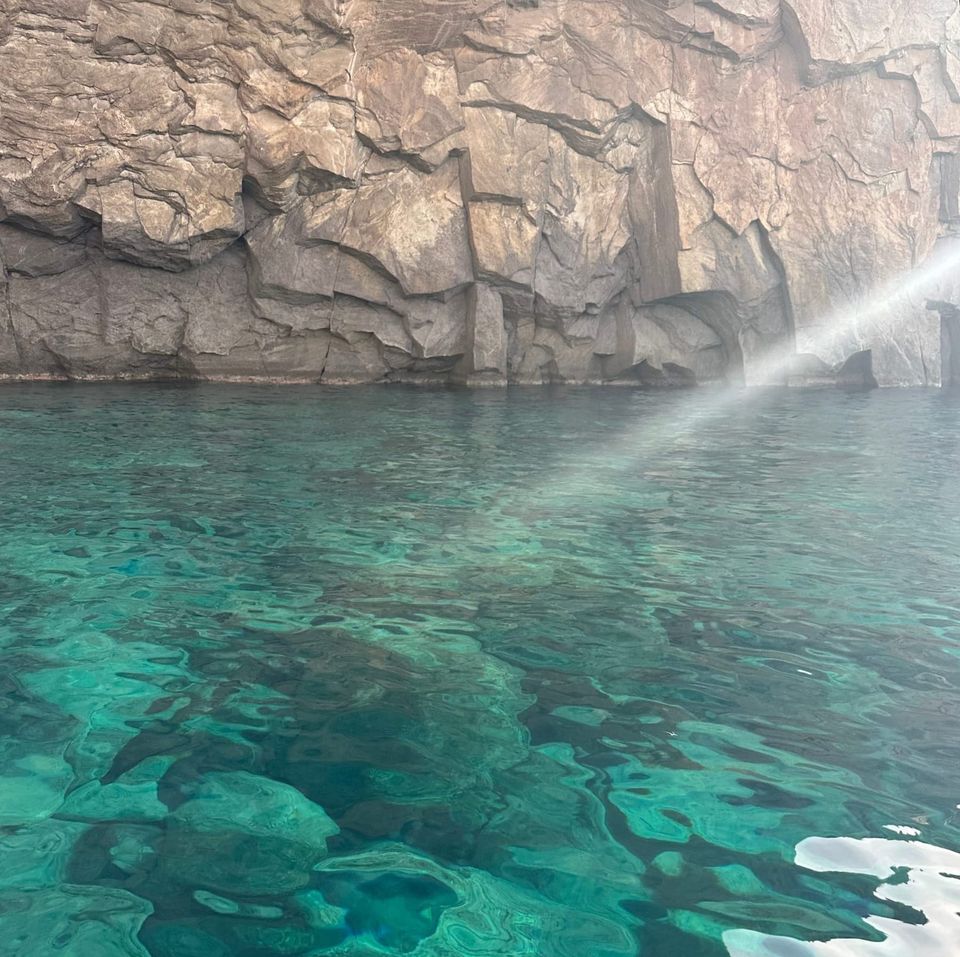
Lipari is the largest of the archipelago and the natural hub, with a proper little town and a harbour that handles most of the comings and goings. But the thing I have to tell you about — and I've raved about Sicilian water before, so forgive me doing it again — is the sea just off the southern tip of the island, around the Scoglio Quadro di San Giuseppe. The water there is an almost unfair blue, the kind of clarity that makes you stop talking mid-sentence and just look over the side of the boat. I've swum in a lot of nice water. This is the spot I still measure others against.
Vulcano is the one that knows exactly what it is — closest to the mainland, most set up for the day-tripper, and the most touristed of the lot. It also smells: the island is named for the Roman god of fire and it earns it, with a low, eggy, sulphurous tang in the air, the smell of a place where the earth is still working. You get used to it faster than you'd think. The beach was genuinely good, and the small moment that stuck was a street vendor with a tub full of obsidian — black volcanic glass, rough shards, the kind the island throws up by the ton. I bought a piece. It sits on a shelf at home now, and every time I notice it I'm back on that hot, sulphur-scented laneway for a second.
Vulcano was also where I first worked up the nerve to ask if I could pay in Italian. "Posso pagare qui?" — can I pay here? It felt all wrong in my mouth, and the look I got back suggested it had come out wrong too, but it worked, and I'd cleared the small, silly hurdle every traveller knows: the first time you transact in a language that isn't your own.
Salina is the green one, noticeably lusher than its neighbours, and an easy, gentle place to round out a day on the water before turning back for the coast.
Day two: Panarea, Stromboli, and the volcano after dark
The second day was the one we'd really come for, on a bigger ferry cruise run specifically to get you to Stromboli for the evening — and out on the water to watch it after dark.
Panarea is the first stop and the smallest, most polished of the islands — a quick, pretty pause to stretch your legs, shop and eat before the main event.
Then Stromboli, which was the best of the whole trip. Stromboli is famous for being permanently, gently active — it has erupted in small bursts on a near-constant cycle for thousands of years, which is why sailors once called it the lighthouse of the Mediterranean. The afternoon there was idyllic in the most ordinary way: the girls swam off the black-sand beach near the port, the water warm enough to stay in as long as you liked, and we ate one of the best pizzas of the trip in a small, cosy place that stretched out forever. There are walks everywhere, including up to high, isolated little churches with views that made the climb worth every step — the kind of spot where you sit down, get your breath back and don't say anything for a while. All the time, the dark cone above us sent up thin wisps of smoke as the light began to go.
And then the reason for the cruise. As it got properly dark, the boat took us out to watch the volcano do its thing from the water — flashes and trails of bright orange against a black sky, the occasional rumble carrying across the sea, no light pollution anywhere to compete with it. Nobody said much. You don't. It's one of those rare sights that quietly resets your sense of how old and how alive the world is, and we watched it the way you'd watch a fire, until the island slid back into the dark behind us.
A swim off a black beach, a cosy lunch, a walk up to a clifftop church, and a live volcano erupting in the dark — all in one day. It was as good a day as I've had anywhere.
The Honest Version
The Aeolians are a boat trip, not a beach holiday — go in wanting to be out on the water and you'll love them. If the budget allows, split it the way we did: a hired boat with a driver for the small islands gives you a slow, go-where-you-like day, and the Lipari water alone is worth the cost; the bigger night cruise to Stromboli gives you the evening and the eruptions, which is the thing you'll still be describing to people years later. Vulcano is touristy and smells of sulphur, but the beach is good and I'd still stop (and still buy the obsidian).
Base yourself on the north coast, give it two days, and make sure one of them ends with Stromboli in the dark.
The Quiet Road covers regional Victoria, Tasmania, Italy, EV road trips, and the food and wine that connects it all. Subscribe to the newsletter for one recommendation every Friday.